A FEW HINTS FOR EXHIBITORS
MOST IMPORTANT – READ YOUR SCHEDULE CAREFULLY!
There is nothing more upsetting than to find you are one bean or scone short or one onion is over or underweight and it is too late to do anything about it.
FRUIT
Small fruits look attractive when displayed on their own leaves, stalks facing the centre.
Apples – one variety unless otherwise stated, picked with stalk, even size and do not polish.
Damsons, grapes plums etc should be cut and handled carefully to retain the bloom.
VEGETABLES
Beetroot: should not be bigger than a tennis ball. Trim tops to 3”/7.5cm. Remove small side roots.
Carrots: wash without scratching. Trim tops to 3”/7.5 cm and tie with natural coloured raffia or twine. Remove small side roots
Courgettes: no longer than 6”/15cm
Leeks: Trim tops to a point and tie neatly with natural coloured raffia or twine. Tease roots, clean and trim if necessary.
Lettuce: Roots should be intact but washed. Cos Lettuce need a light tie in the centre.
Onions and shallots should be clean, trimmed of their roots, short top folded over and tied with raffia or string. Exhibit shallots on a plate of sand, onions on cardboard rings.
Peas: Cut from plant to leave a small stem. Handle as little as possible to retain the bloom.
Potatoes: wash carefully when lifting. Can be kept fresh in fridge
Rhubarb: Forced – do not cut foliage; Natural – cut top foliage leaving approx. 3”/7.5cm from leaf stalks. Trim off any bud scales. NB Rhubarb is NOT a fruit.
Runner Beans: must be straight and young, brittle when snapped. Cut from plant to leave a small stem. Can be kept fresh in fridge in damp kitchen paper.
Spinach/Chard: Must be fresh and presented in a fan shape with overlapping leaves and neatly trimmed stalks
Sweet Corn: Remove about a quarter of husk to reveal rows of grains
Tomatoes: should be just ripe and shown with the small stalk and calyx attached
More detailed suggestions (from RHS guide) are available from the Committee
Hellebores : to stop them from drooping add a few drops of washing-up liquid to the water
3 stage rose: 3 blooms of one variety, staged in one vase with bud at the top followed by perfect bloom then full bloom as shown below:

COOKERY
Where the recipe Is not provided and your own recipe is used then please ensure that the ingredients are clearly shown next to your entry to prevent any potential allergic reactions from the judge. Any own recipe entries not showing a list of ingredients may not be judged.
Bread rolls: Display in a bread basket, should be uniform in size
Fruit or sweet scones: Use a fluted cutter, no glaze
Plain scones: Use plain cutter, no glaze
Savoury scones: Use plain cutter, glaze with milk or egg
Victoria Sandwich: Fill with raspberry jam and dust top with caster sugar
Jams, Jellies, Chutneys, Pickles: Do not use jars and lids with commercial lettering. New twist top or plastic lids should be used. Wax discs and cellophane are not the preferred option nowadays and should not be used for chutney. Label jars with day, month and year on white label placed 2/3 down the jam jar
Chutney: should mature for at least 3 months before showing. The label should show whether mild or hot chutney
Jellies: Use a small ½ lb jar. Should be clear with no pulp, haze or air bubbles. Consistency should tremble but hold its shape
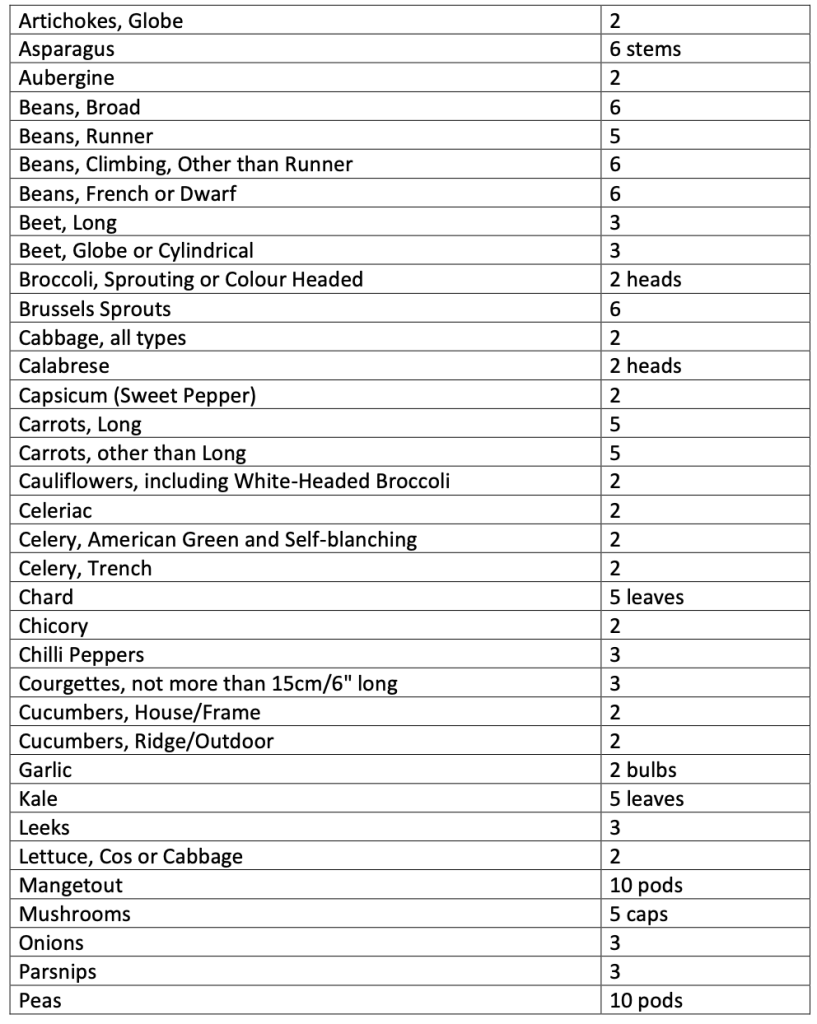
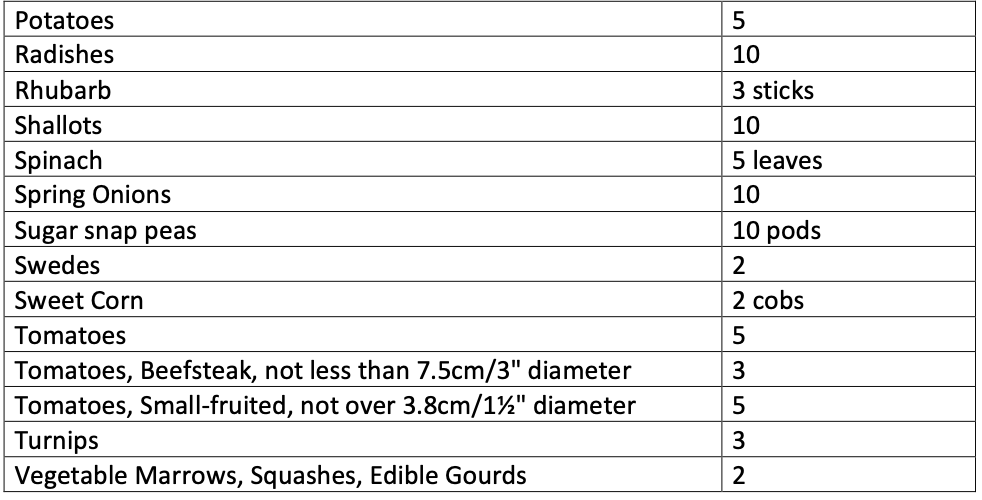
For ‘Collection of Vegetables’ and ‘Any other veg.’ Classes
The list below shows the number of specimens required.
Each vegetable will be awarded points out of 10 for presentation, uniformity, size, shape and colour
Please consult the Secretary for any item not listed.
For ‘Any other Fruit ‘Classes
The list below shows the number of specimens required:

 Sissinghurst Flower Show Society